Welcome to Thomas Insights — every day, we publish the latest news and analysis to keep our readers up to date on what’s happening in industry. Sign up here to get the day’s top stories delivered straight to your inbox.
2020 was certainly not the year we expected, nor a year that most of the world was prepared to handle. Industrial businesses faced challenges they couldn’t have dreamed of: raw material shortages, massive logistics delays, and nationwide shutdowns that took a huge toll on operations.
As we reach the end of the year, these businesses have learned a valuable lesson in preparation for a crisis and now ask themselves, “How can I be better prepared for a major industrial disruption?”
For Thomas Industry Update Podcast guest Terri Jondahl, CEO of CAB Incorporated, preparation for 2020 was not as much of a substantial, urgent undertaking as it may have been for other businesses; her industrial business had already used a combination of automation, offshoring, and good old-fashioned process improvement to essentially COVID-proof CAB Incorporated.
So, what lessons can we take from Jondahl’s leadership? Here are a few steps she’s taken over the years to fortify CAB Incorporated in the face of a crisis.
1. Continuous Process Improvement
Jondahl explained in her conversation with Thomas CEO and President Tony Uphoff that CAB is in a constant state of improvement, as any business should be, crisis preparation aside.
“When you look at manufacturing, or even if you’re looking at making hamburgers and McDonald’s, everything breaks down into a process,” Jondahl explained. “And if you figure out how to break down that process into steps that you can do efficiently and effectively, then you’re going to become the best at whatever it is that you’re doing.”
For Jondahl, process improvement translates directly into minimizing risk for both business operations and on the factory floor.
“When you talk about my interest in quality control, it’s really about figuring out how to minimize my risk in whatever I’m doing,” she said. “I’m always taking a look at everything and saying, okay, how can we take the risk out of this?”
2. Evolve with the Industry
In order to ensure CAB Incorporated kept its competitive advantage and continued to expand operations, Jondahl explained to Uphoff that they needed to continue to diversify both processes and product offerings. She specifically recounted when CAB evolved its wind energy flanges as a result of evolution in the market, which opened them up to even more opportunities.
“We began to evolve with those products… We had strong skills and engineering teams around the world that helped us get into another market, which was castings and forgings,” Jondahl said.
Jondahl explained that while the transition was initially intimidating, she knew that it would keep CAB on the leading edge of the sector.
“As we grew the business and tried to diversify, we knew we had to get better because the whole world was improving its quality system,” she explained. “But if you’re going to take bigger and bigger risks and tie up more and more money, we had to be able to minimize our exposure.”
3. Keep Operations Distributed Across Multiple Locations
Jondahl explained that one of the key reasons CAB Incorporated was so well prepared to address the manufacturing challenges of COVID-19 was because the company had operations evenly distributed across multiple locations, both across the nation and worldwide.
“Long before COVID, we began to see folks talking about reshoring, and when tariffs came, that was a push in that area,” Jondahl explained. “What reshoring has done for us is it’s the middle piece of the market where large companies not going to be able to bring that smaller or medium-sized volume back to the U.S.”
Jondahl elaborates that CAB’s operations are spread across Asia and the U.S., so they can offer the manufacturing location that makes the most sense for the client and their respective products.
“Each of our parts is evaluated both by our customers and by us for what makes sense,” Jondahl said. “But we added machining capability, upgraded some equipment in our Texas operation, and opened a manufacturing operation in the state of Washington to serve one of our biggest customers out there. But it’s still a mix of offshore and onshore and keep in mind when we manufacture in the U.S., probably 35% of what we manufacture in the U.S. is parts that are brought into the U.S. and added to other things.”
She emphasizes that this tactic has kept the business agile through all of the challenges it has faced over the last 25 years, whether that be COVID-19, tariffs, or a recession.
“Tomorrow we may end up with a whole new world where suddenly the rules are changing again and as a business owner, you want stability, [no matter what] the policy is,” she explained. “But you have to be able to be flexible. Geopolitical change can happen, so I have to be able to move around.”
4. Add Automation Capabilities
CAB Incorporated, like other industry leaders, has continued to adopt Industry 4.0 technologies into its operations as they advance. Jondahl has become such an advocate that she proclaimed, “If I won the lottery tomorrow, a really big lottery, I would build a bunch of factories. I don’t know what I’d produce with them, but I would love to have more factories, more equipment.”
In Jondahl’s years in industry, she’s continued to become more excited and astonished by the capabilities Industry 4.0 has brought to her facilities.
“We’re not a very big manufacturer, but we have the ability to actually run lights out processes in our Washington facility,” Jondahl explained. If we chose, the equipment will do it and you just turn on the machine and tell it to run overnight, I’m feeling like I can ask Alexa to run a part for me.”
She specifically cites additive manufacturing as a disruptive technology for industry, saying it will be a “real game-changer.”
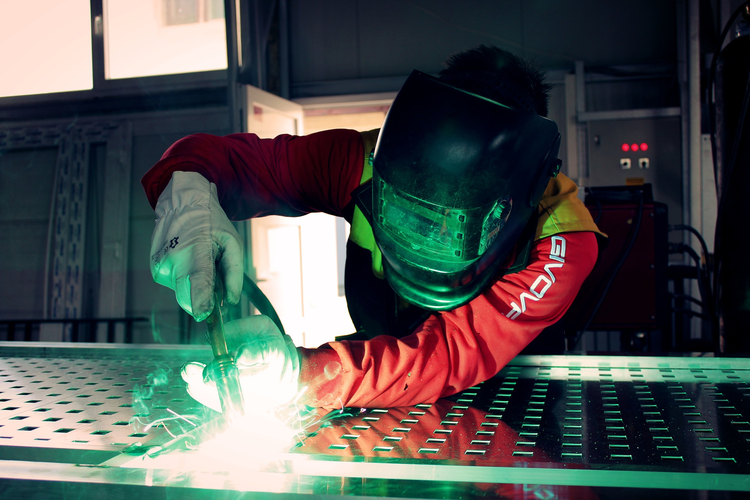
Image Credit: Image by Emir Krasnić from Pixabay
More from Industry Trends

![9 Industry Updates You Need to Know This Week [60-second Read]](https://reshoringmfg.com/reshoring/wp-content/uploads/images/wppipes/2020-12/451f482560.png)
![Ending 2020 on a High Note: 6 Positive Stories to Celebrate This Week [Amplify Friday]](https://reshoringmfg.com/reshoring/wp-content/uploads/images/wppipes/2020-12/e12eeac360.png)