Welcome to Thomas Insights — every day, we publish the latest news and analysis to keep our readers up to date on what’s happening in industry. Sign up here to get the day’s top stories delivered straight to your inbox.
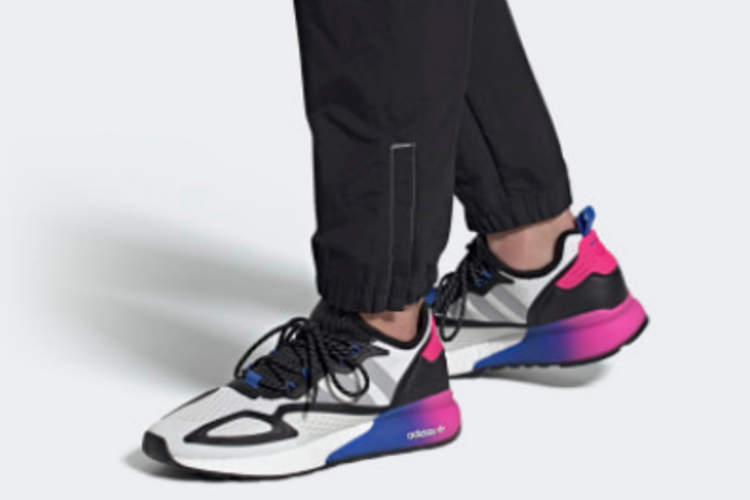
A staggering 99% of shoes sold in the U.S. are manufactured overseas and imported from countries including China, Vietnam, and Indonesia.
Like so many retailers, Adidas has been experimenting with ways to drive efficiency within its supply chain and respond to the Trump administration’s calls to bring manufacturing jobs back to U.S. soil. In recent years, this has included leveraging automation and robotics, as well as onshoring, reshoring, or nearshoring its manufacturing processes.
For an organization that manufactures 90% of its products in Asia, moving production closer to home is a colossal challenge.
Adidas Speedfactories
In September 2016, Adidas established its first robotic shoe manufacturing factory, known as a Speedfactory, in Ansbach, Germany. A second Speedfactory opened near Atlanta in 2017.
Before launching the Speedfactories, almost all of the 300 million shoes produced annually by Adidas were made by hand. A study by Deutsche Bank reported that the Speedfactories could produce a pair of shoes in just five hours. In a typical factory in Asia, the entire process — including the shipping time to Europe — might take more than a month.
At the time of opening, Adidas planned to increase the output of its Speedfactories to one million pairs of shoes each year by 2020.
However, in November 2019, Adidas announced that it would be ceasing all production at its two Speedfactories by April 2020. The company had hoped its ambitious and novel approach to sneaker manufacturing would pay dividends in terms of increased flexibility and efficiency as well as a reduction in the time taken to get new products onto shelves. Adidas had even expressed its ambitions to build an extensive global network of Speedfactories.
A key challenge Adidas faced at its Speedfactories was a limitation to the number of shoe models it was able to produce. In its statement, the company appeared eager to return production to Asia, “where the know-how and the suppliers are located.” Adidas declined to reveal the costs of closing the Speedfactories but confirmed it will continue to apply the technology to some of its supplier factories in Asia.
Has Adidas Abandoned Its Reshoring Efforts for Good?
Whether Adidas will commit additional funds and efforts to moving production back to the U.S. is yet to be seen. Either way, questions remain surrounding the extent of the role reshoring has to play in creating jobs for Americans. In many cases, reshored production tasks are adopted by robots rather than human employees.
In 2017, Harry Moser, founder of the reshoring initiative said, “If you had an assembly plant that was making 500 cars a day and you shut it down 20 years ago and you offshored the production, and you move the plant here again, now you’re going to be making the same number of cars with maybe half as many people.”
In the case of Adidas’ German Speedfactories, just 160 jobs were created where a typical Asian factory would employ 1000.
The Impact of the Coronavirus on Adidas’ Supply Chain
There has been much debate surrounding the impact COVID-19 will have on globalization. Could this be the disruptor that eliminates global supply chains? Adidas’ supply chain and revenue have certainly taken major hits due to the COVID-19 pandemic.
The company announced it was facing sales losses in China of more than $1.13 billion in the first quarter of 2020. In April, the retailer joined forces with several brands and the International Labor Organization to call for emergency funding to help support its factory workers. The company also experienced significant sales drops in Japan and South Korea.
The supply chain disruption and uncertainty caused by the coronavirus have led to a renewed focus on risk mitigation. For retailers like Adidas, this could possibly stimulate a new wave of reshoring initiatives.
Image Credit: Courtesy Adidas
More from Supply Chain