
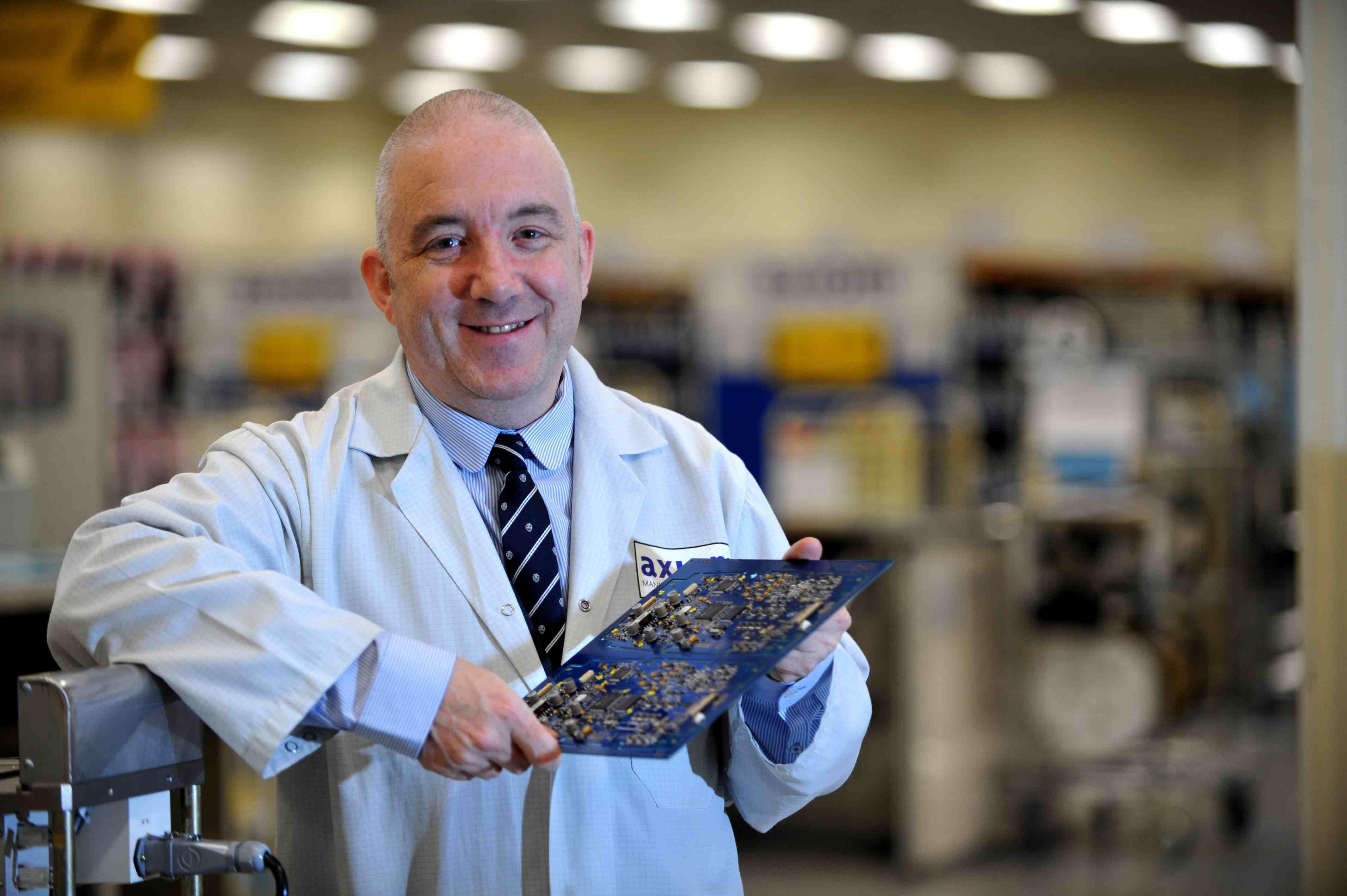
David Davies
In the electronics industry the arguments for and against offshore and onshore manufacturing seem to follow a never-ending yo-yo pattern.
More recently, a third trend has developed in the form of re-shoring; as worries about quality issues, lengthened logistics and security have resulted in UK companies returning to UK-based contract electronics manufacturers (CEMs).
UK-based CEMs are undoubtedly proud of the fact that the strength of their supply chain is inspiring OEMs to realise the total cost of acquisition. But the truest sign of a strong supply chain is one that attracts overseas companies to choose UK CEMs.
The electronics and technology industry represents one of, if not the furthest reaching sector the world has ever seen. It is no longer limited by the source locations of raw materials or consumer markets.
This global market, which has developed to allow a consumer in China to purchase the same mobile device as a consumer in the US, is unparalleled; and completely dependent on those technology manufactures’ supply chains.
Whatever advances are made in other regions, there is no escaping the fact that the electronics market is more dependent on China’s manufacturing abilities than any other sector.
China’s historic ability to undercut production costs, though economies in employee wages, undoubtedly provided the region its initial foothold to secure and lock down supply chains. However, times are changing.
Increased consumer demand, competitive markets, and ever-shortening product life cycles combined with rising wages have meant that even China’s supply chains are struggling to keep pace. Though it remains the dominant CEM nation, China has lost some market share as Western technology companies re-locate to new low-cost locations in Asia and Eastern Europe, for example Intel’s recent move to Vietnam.
Concerns over quality and shortening product life cycles have also seen some of the world’s most influential companies electing to re-shore their manufacturing in an effort to shorten their supply chains and protect the build quality of their products.
In 2013, Apple, who hasn’t manufactured a product on home soil since the 1980s, announced that its laptop production would be moved to Texas.
Here in the UK, we can site the re-shoring of Raspberry Pi’s manufacturing to South Wales.
If re-shoring is evidence of China’s grip on off-shore manufacturing loosening, could the next conceivable step be for China’s own growing technology sector electing to off-shore its manufacturing?
I have always believed that the strength of the UK’s manufacturing industry should be based on quality, not quantity. The focus of UK CEMs should be ensuring that the manufacture of UK developed, high technology, low-to-medium volume products remains in the UK.
Today, we are not only able to attract UK OEMs, but the strength of our supply chains is now beginning to attract business from Chinese companies. This is testament to the strength of our supply chains and reputation for manufacturing quality, reliable products on time and within budget.
Trust is a key factor when it comes to off-shoring. The Far East and even Eastern Europe, to an extent, has had its fair share of issues around counterfeit products so OEMs would be foolish not to question whether or not their suppliers are really using the materials and components specified.
In a world where reputation is everything, any cost savings made by off-shoring can very quickly be diminished by risk and re-shoring or choosing to manufacture in a region where counterfeit parts are not commonplace lessens this risk.
The resurgence of the supply chain sector in the UK in the last couple of years means that we can now be as cost competitive as overseas when it is done right. And although our labour costs remain higher, by sticking to the low to medium volume, high-tech work that we do so well in this country, it means that we can manufacture intelligently and the total cost of acquisition becomes far more comparable.
As always, it is about OEMs and CEMs working together from the initial design stages of a product in order that CEMs can provide insight into factors such as component availability, traceability and life-cycle in order that they can build an agile supply chain to produce a final product on-time and to budget.
In order to achieve this, an effective CEM will buffer its supply chain in advance in order that the customer can be assured of timescales and budgets before an order is placed. To achieve this requires a degree of confidence and trust between CEMs and their suppliers as well as a shared level of risk.
It would be fair to predict that over the coming years we will continue to see this trend towards re-shoring as well as the opportunities to tender for business from Chinese-based OEMs.
I think the volumes manufactured in the UK will continue to rise as our CEMs increase their capability to manufacture a broader and cross-section of products. Our distribution and logistical partners will be pushed towards more intelligent solutions making the total cost of acquisition even more competitive.
Winning business from Chinese-based OEMs is a real coup for UK manufacturing and is testament to the growing confidence in the industry.
The supply chain sector has worked hard in recent years and I now believe we are starting to reap the benefits of this hard work and will see more businesses based in China and the Far East looking to the UK as a viable option for high-tech manufacturing.
Writer is David Davies, managing director of Newbridge, South Wales-based Axiom Manufacturing Services.

Tags:
Axiom, China, manufacturing
Related Tech News
-

Intel buys into Spreadtrum and RDA to push mobile x86 into China
Intel has bought a 20% share in the China state-owned…more »
-

Welsh wafer maker reports loss but sees wireless recovery
IQE, the Wales-based semiconductor wafer supplier, has seen a recovery in the wireless…more »
-

Manufacturer focuses on investing in skills
A Welsh contract electronics manufacturer Axiom Manufacturing Services has employed…more »
-

Charcroft builds UK production of VPG foil resistors
Charcroft Electronics is to increase production of foil precision resistors in the UK following a…more »
Share your knowledge – Leave a comment
Source Article from http://www.electronicsweekly.com/news/business/viewpoints/building-supply-chains-rival-china-2014-10/


