
The disruption exposed deep interconnections in many supply chains, and just how dependent some sectors like the auto industry were on a few semiconductor factories in Taiwan, or the pharmaceutical sector on Chinese active pharmaceutical ingredients and fine chemical imports. This challenged companies and governments around the world to question their dependence on distant suppliers and logistics links that might be prone to interruption—not only because of public-health crises like Covid-19, but those that might be politically motivated.
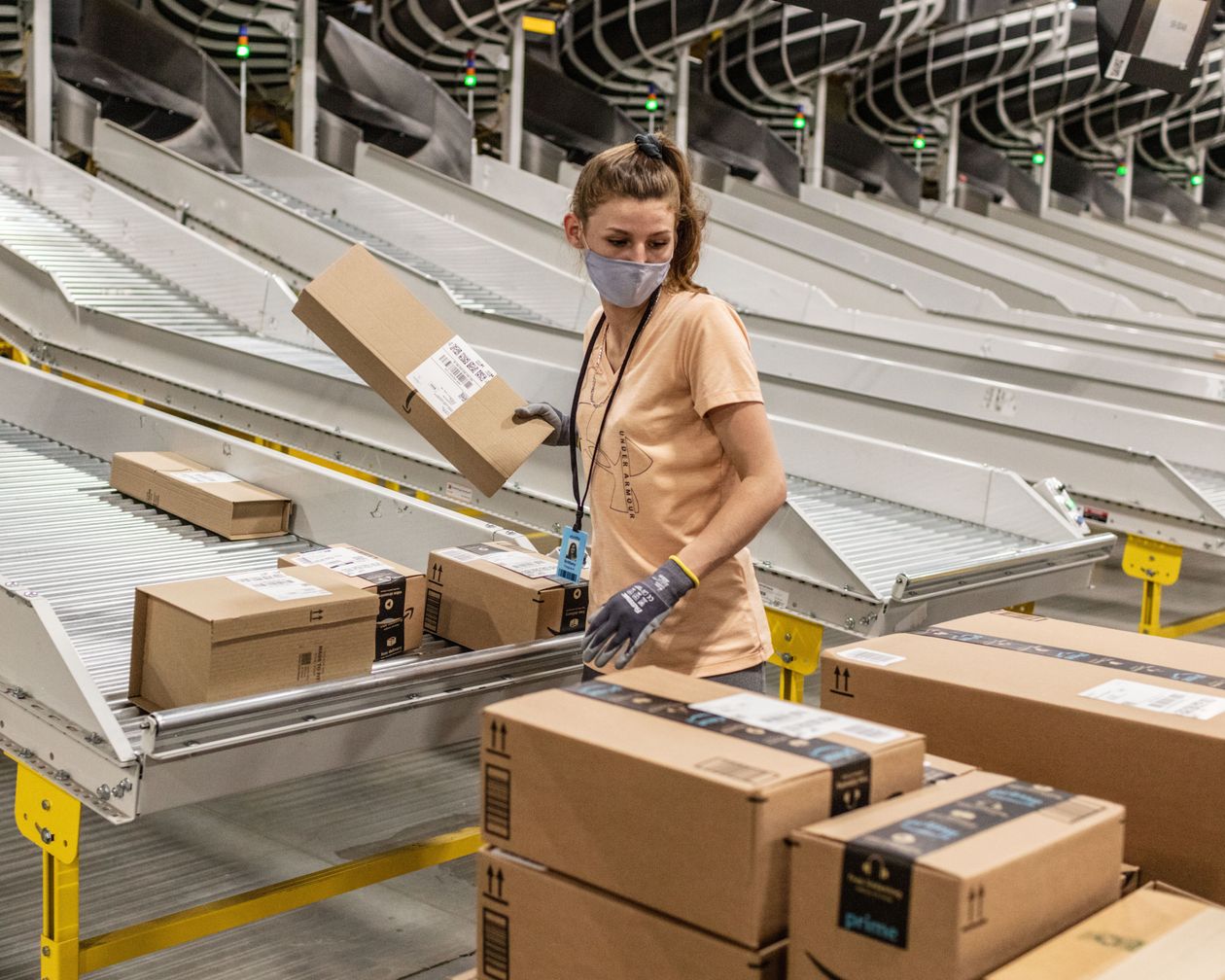
An Amazon employee in Garner, N.C., adds to a stack of outgoing orders on a pallet during the company’s Prime Day promotion in June.
Photo: Jeremy M. Lange for The Wall Street Journal
As a result, “resilience” has become the new watchword. How quickly can a company or a country bounce back from an interruption in the supply of critical products, components or raw materials? What if China suddenly cuts off U.S. access to rare-earth minerals, semiconductor chips or the ingredients used to make antibiotics and other drugs?

Calls for resilience have led to a push toward more domestic production in the U.S. or within the European Union of PPE, semiconductors, pharmaceuticals, anything that might be exposed to future disruption. These parallel China’s “dual circulation” strategy, in which it stays open for the world to buy its exports, while fostering a domestic market that isn’t dependent on foreign-sourced critical materials like semiconductors, whose supply might be interrupted.
Resilience sounds great, of course. Who doesn’t want a resilient supply chain and a resilient economy? But while there are some things that companies and governments can—and likely will—do to increase their ability to respond to future shocks, these will all come with costs. So while we will see some improvements, I am dubious about how much of a difference they will make over the long term, especially for withstanding widespread shocks like another pandemic. In the end I think economics will trump current concerns.
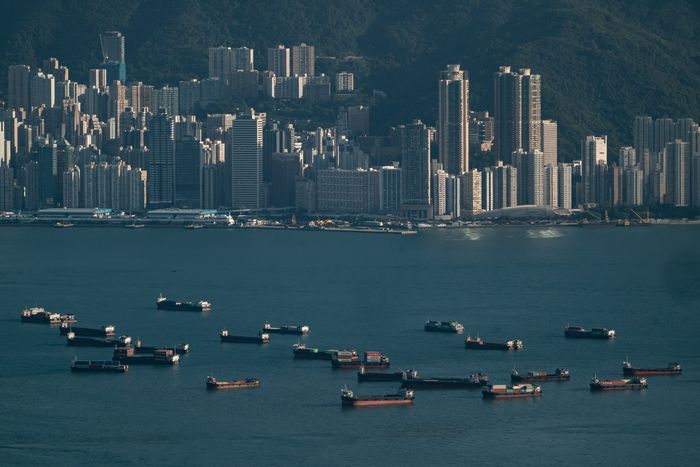
Container ships sit moored outside a container terminal in Hong Kong in November, reflecting the disruption of global supply chains.
Photo: Anthony Kwan/Getty Images
China +1
For instance, if better resilience means a more geographically diversified supply base, we will get some of it from “China +1” strategies that many companies are already implementing. Politically sensitive gear such as telecom and computing equipment have been in the lead, with firms shifting production to Southeast Asia and Mexico.
But there is a limit to how much companies can reshore swaths of manufacturing. When labor costs aren’t a dominant factor in a product’s costs, domestic assembly costs have rarely been an issue. Thus there still is strong domestic manufacturing for high value-added products such as medical devices, jet engines or Tesla vehicles. They may use foreign-sourced parts such as castings or precision-machined parts, but production of those can be relatively easily relocated. Quite a few domestic battery factories are planned or under construction, because auto makers realize how much of an electric vehicle’s value-add is locked up in those essential components.
But for products with labor-intensive assembly, there are the dual challenges of hiring and training people to do the work, as well as the overall economics. When companies moved production to places like China in the early 2000s, the costs of setting up new factories, training workforces, and establishing local supply chains was paid for by the costs savings in the final products.
Related Video
Labor arbitrage works when you move from a high-cost country to a low-cost country, but going the other way is problematic. Not only will the finished products likely be costlier, but somebody has to pay for the transition costs—the move, the training, bringing in suppliers. Maybe these costs will be passed on in higher prices, or maybe in diminished profit margins, but it won’t come free. Will Americans pay higher prices for goods made in the U.S.A.? That is still a hard sell, so don’t expect much of that kind of production to move back into the country.
Shipping bottlenecks and rocketing transportation costs made clear just how limited domestic manufacturing is. Economic trade theory would argue that as shipping costs skyrocketed, demand for such products would fall. It doesn’t make sense to source things from far away if the shipping cost is too high a percentage of their value. But even though transport costs jumped fivefold or more, often there were no domestic alternatives, so it didn’t matter what it cost to ship them. China’s record exports in the latter part of 2020 and most of this year reflect this. The loss of capabilities in domestic U.S. manufacturing, especially in workforce capabilities, makes reshoring much harder than economists might argue.
Some winners
Some improvement in resilience will come from the regionalization of production to low-cost countries near the U.S. and Western Europe. By offering relatively low labor costs—maybe not as low as Asia, but with less need to thread long supply lines—these countries could be big winners. Suppliers in Mexico and low-cost Eastern European countries like Hungary, Romania and Poland, as well as in North Africa, stand to benefit if those countries can keep their politics from becoming an issue. All offer the benefit of less distance and time to market, and less dependence on long oceanic trade lanes.
Yet the big question remains: How much will more resilient supply chains cost, and will they have staying power? Once the current struggles become a distant memory—and memories are notoriously short when profits are at stake—chief financial officers will start questioning higher costs or cash tied up in inventory, and the focus on competitiveness will come back with a vengeance. Some companies will continue to improve their just-in-time strategies with maybe a little more just-in-case. But I suspect many others will probably slip back to a “low cost is everything” strategy—especially when ocean shipping returns to more rational cost levels, which is inevitable when the new batch of container ships on order get delivered.
One final point: Will resilience become a justification for a new era of industrial policy? Will the willingness to use trade and policy tools to affect the footprint of supply chains be one of the lasting effects of the pandemic?
I believe the signs suggest that it will be, even though as governments race to push investment into sectors like semiconductors, I doubt that subsidies will really foster competitive, sustainable local manufacturing.
That’s because the policy goal of regaining production leadership in advanced semiconductor technologies has become conveniently conflated with the needs of auto makers who use more trailing-edge technologies but are begging for more local sourcing because they feel like they then have more control and will be less susceptible to supply interruptions. But how sustainable will that production be when the subsidies end and if domestic costs rise? Manufacturing more chips in the U.S. will help relieve some of the current production capacity constraints that are hitting auto makers, but supply chains will still be prone to disruption if the U.S. has to continue to send those chips to Southeast Asia for packaging.
In other words, if we equate resilience with domestic self-sufficiency, we would have to relocate chip packaging, materials supplies, tool sources and much more from across Asia and Europe. I hope we develop more domestic advanced chip manufacturing, but I think it’s unrealistic in such a complex industry where the capabilities are distributed globally to think we can do everything ourselves.
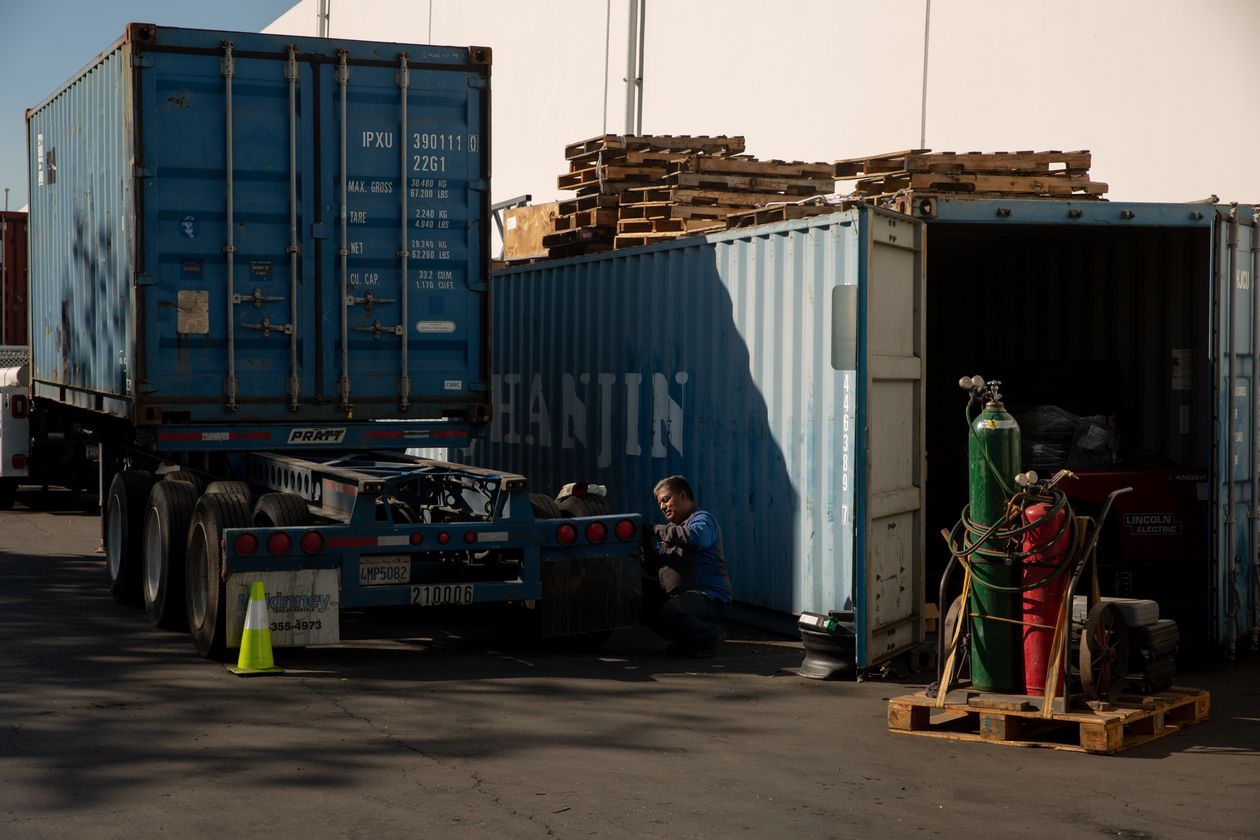
A truck undergoes maintenance in Carson, Calif. Continuing high consumer demand means more wear and tear on trucks and other supply-chain infrastructure.
Photo: Allison Zaucha for The Wall Street Journal
Dr. Shih is the Robert and Jane Cizik professor of management practice at Harvard Business School. He can be reached at reports@wsj.com.


