
The escalation of attacks on international shipping in the Red Sea is making itself feltin consumer goods supply chains. The furniture industry is noexception.
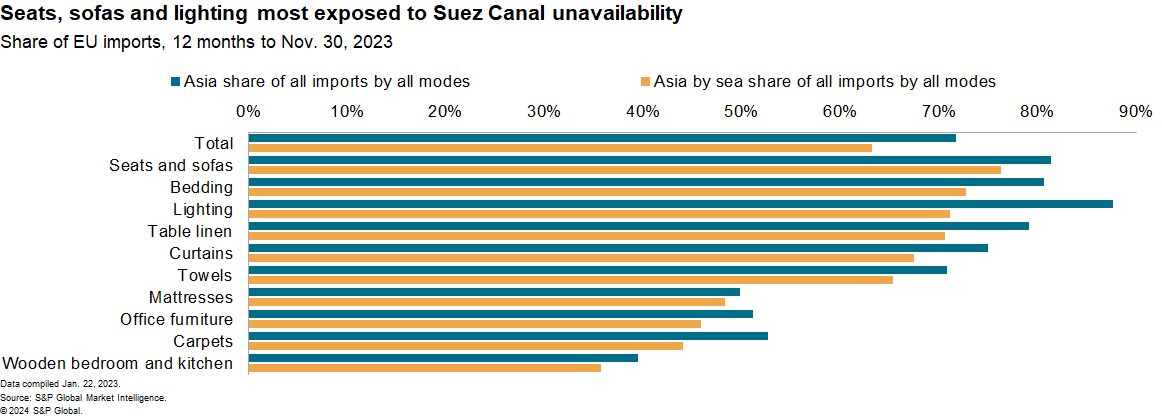
The delays and higher costs associated with the disruptions arebeing particularly keenly felt by smaller retailers. The Europeanfurniture retail sector is heavily exposed to imports from Asia bysea given there are fewer alternative transport mode options thanfor retailers in the US. Shipments from Asia by sea accounted for63% of total EU furniture imports in the 12 months to Nov. 30,2023, our data shows.
More exposed products include seats and sofas, bedding andlighting. Less exposed products include carpets, which arepredominantly sourced from Turkey, and specialty furnitureincluding office furnishing and wooden bedroom and kitchenfurniture, where local design and premium production matter.
The exposure of US furniture retailers is lower given onlyshipping by sea from Asia into the US east coast is directlyaffected. Imports by sea from Asia accounted for 48% of US eastcoast furniture exports and 33% of total US furniture imports.
Trade flows of components and materials into Asia from Europeand North America will also be affected by delays and increasedcosts. Shipments from the EU accounted for 16% of mainland China’simports of wood in the 12 months to Nov. 30, 2023. That representsa marked increase from 3% in 2016. That increase reflects a jump indemand for softwoods as well as reduced imports from the US andCanada linked to retaliatory tariffs applied against US importsduring the Trump administration.


