
By Edward Tse, Gao Feng Advisory
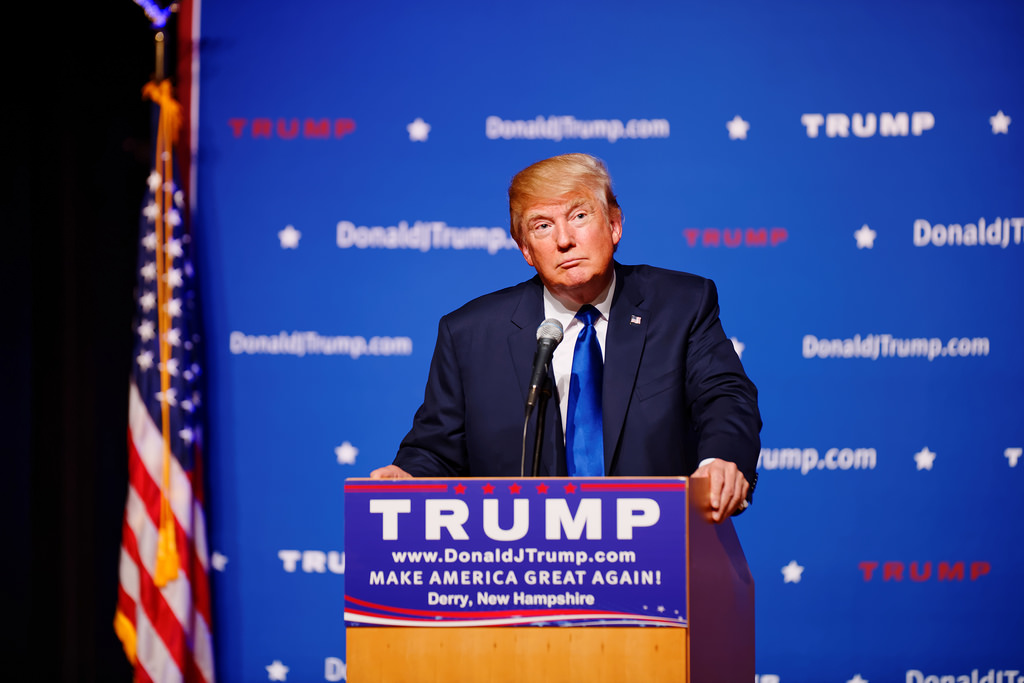
Donald Trump’s election as the next US president is generating a lot of speculation about US-China relations, especially in investment and trade. People are wondering what the implications will be for both Chinese and US companies.
We can look at this situation in several ways.
First, isolationism can never generate sustainable growth for any country. History has proven this over and over again.

Dr Edward Tse, Gao Feng
Second, China is not taking a passive approach to strengthening its role in world trade. China’s domestic market will continue to grow, possibly somewhat slowed by Trump’s protectionist initiatives and anti-China trade policies, if they are indeed enacted. But it is unlikely that China would crash.
Third, while some US companies may consider moving some of their manufacturing from China back to the US, major “reshoring” moves are unlikely.
Moving manufacturing, especially the type that is technologically involved, is not a trivial matter. It is not only about costs, it’s also about quality and responsiveness.
Manufacturing supply chains are highly complex and often involve multiple layers of suppliers. A manufacturer cannot simply move locations at will, as they must ensure that the rest of their supply chain is willing and able to join them.
Also, manufacturing is becoming more automated. The notion of “creating jobs” through manufacturing these days is somewhat different than that before.
Fourth, while manufacturing should be a core part of any major, sustainable economy, economic value increasingly comes from services and business model innovations. Many of these are digital or internet plays, making it harder to apply “tariffs” on these “imports”.
Chinese companies are increasingly becoming prominent players in these sectors. In fact, the leading Chinese digital players are closer to their American counterparts (in Silicon Valley, for instance) in terms of company culture, values and organisational forms, than the hierarchy in Beijing.
Many Chinese digital firms receive investments from US-headquartered venture capital funds and vice versa. China and the US are much more intertwined than many people recognise.
When Chinese invest in US companies, more often than not they have maintained employment in the US, or even increased it.
While globalisation may seem to have taken a somewhat backwards step these days, the fundamentals for more globalisation, and regionalisation, are still strong.
Hundreds of millions of people have been lifted from poverty in the past couple of decades.
In a way, it is understandable why economic nationalism has found its way back, but it is hard to see how it would replace globalisation in a grand and sustainable way.
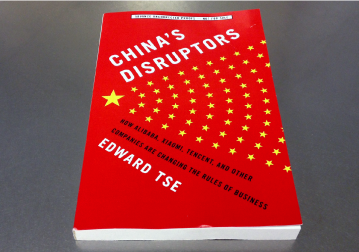
Buy Edward Tse’s book, China’s Disruptors
Edward Tse is founder and CEO, Gao Feng Advisory Company, a global strategy and management consulting firm with roots in China. A pioneer in China’s management consulting profession, he led the Greater China operations for two major international management consulting firms for 20 years and is widely known as China’s leading global business strategist. He is author of The China Strategy (2010) and China’s Disruptors (2015).
Share this:
- Click to email this to a friend (Opens in new window)
- Click to print (Opens in new window)
- Click to share on LinkedIn (Opens in new window)
- Click to share on Twitter (Opens in new window)
- Click to share on Facebook (Opens in new window)
- Click to share on Google+ (Opens in new window)
- Click to share on Reddit (Opens in new window)
- Click to share on Tumblr (Opens in new window)
- Click to share on Pinterest (Opens in new window)
- Share on Skype (Opens in new window)
- Click to share on WhatsApp (Opens in new window)
- Click to share on Pocket (Opens in new window)
- Click to share on Telegram (Opens in new window)
You might also like…
-
55
 China-based investment expert Edward Tse, CEO of Gao Feng, says financial technology companies are thriving in China With the Chinese government keen to encourage innovation the fintech revolution is quickly gaining pace. Financial technologies companies backed by Chinese venture capital raised $2.4 billion in the first quarter of 2016, according to…Tags: china, chinese, companies, management, consulting
 -
49
 China’s leaders are instituting a new industrial revolution with robotics at the centre, and are inviting investors from outside countries. But what’s it like to enter the dragon with your money? In this article, China-based investment expert Edward Tse, CEO of Gao Feng, outlines some things to consider Broadly speaking, there…Tags: china, companies
 -
40
 China-based investment expert Edward Tse, CEO of Gao Feng, says Chinese manufacturers have progressed from being considered “shanzai” – copycats – to embracing the idea of becoming developers of advanced robotics and automation systems Chinese electrical appliance manufacturer Midea’s move to acquire Kuka, the German robot maker, could be a…Tags: china, chinese, manufacturing, companies, will


