Welcome to Thomas Insights — every day, we publish the latest news and analysis to keep our readers up to date on what’s happening in industry. Sign up here to get the day’s top stories delivered straight to your inbox.
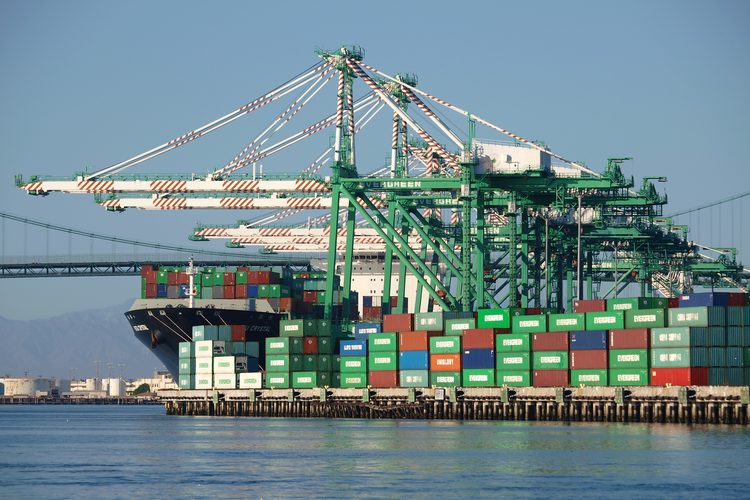
In the years following World War II, the U.S. was the world’s industrial powerhouse — in part due to Cold War defense spending, the housing boom, and an expanding automobile industry.
Eventually, though, many U.S. companies turned to other countries like Japan, Taiwan, and later China for access to raw materials and relocated production to cheaper terrain. But priorities are now shifting, and major manufacturers have plans to reshore and bring manufacturing back home.
Reversing The Trend
Cost efficiency is not the only aim of the manufacturing game — for many corporations, it has been superseded by supply-chain resiliency. Many U.S. companies have realized that keeping processes closer to home can be much more reliable and secure.
Earlier this year, General Motors (GM) announced what it described as the “single largest investment announcement in GM history”: $7 billion for four electric vehicle (EV) manufacturing facilities in Michigan. The decision to build a new battery factory, convert an existing factory to focus on electric pick-ups, and upgrade two vehicle assembly plants will create 4,000 jobs in the state where GM was founded.
GM boasts the broadest EV portfolio of any automaker and clearly sees manufacturing on home turf as a key tenet of its strategy. This strategy also involves forging stronger links with reliable suppliers to ensure a more resilient and North-American-focused supply chain.
Micron Technology, the American producer of computer memory and data storage headquartered in Idaho, last year announced a multi-billion-dollar investment in the future of memory manufacturing and research and development. This includes plans to expand in the U.S., despite costs running 35-40% higher here than in lower-cost markets with established semiconductor ecosystems.
Attracting Domestic and Foreign Investment
GM and Micron are not the only U.S. businesses pouring money into manufacturing on home soil. Technology company Intel is investing $20 billion into two new semiconductor chip factories in Arizona (the computer chips essential for electronic devices including smartphones, washing machines, and cars); aerospace corporation Lockheed Martin switched production of F-35 jet parts from Turkey to America; and in Arkansas, U.S. Steel plans to build “the most advanced steelmaking facility in North America.”
Not only are American companies returning, but the U.S. manufacturing scene appears to be becoming a more attractive prospect for foreign companies too.
Samsung, for example, has committed to the biggest-ever foreign investment in Texas: a $17 billion chip plant that will create 2,000 skilled jobs after it becomes operational in 2024.
Japanese automaker Toyota, meanwhile, is investing $1.29 billion into a battery factory in North Carolina, which should create 1,750 new jobs, and initially produce enough lithium-ion batteries for 800,000 EVs and hybrid vehicles a year, with plans to expand to up to 1.2 million.
Ted Ogawa, CEO of Toyota Motor North America, described the South-eastern state as the ideal location. “North Carolina offers the right conditions for this investment, including the infrastructure, high-quality education system, access to a diverse and skilled workforce, and a welcoming environment for doing business,” he said.
Why Are Companies Reshoring?
With ports overwhelmed, shipping capacity dramatically reduced, the increased cost of freight, delays, cancellations, export restrictions, and global shortages of essentials such as PPE, rare earth materials, and chips — the COVID-19 pandemic accelerated the need for domestic manufacturing.
GM, for example, was forced to cut more than 800,000 vehicles from its planned production in 2021 following the global shortage of semiconductors. The chips were already in high demand pre-pandemic, and COVID-19 compounded supply issues.
In order for the U.S. to remain competitive, eliminate supply chain disruptions, and better the nation’s infrastructure, President Joe Biden added more than 360,000 manufacturing jobs to the economy, the most in almost three decades. His infrastructure plan involves making additional capital available for U.S. suppliers, enabling local businesses to obtain federal contracts more easily, and investing in U.S. ports.
In addition, environmental concerns are now right at the fore for most multinationals, and transporting vast swathes of goods across oceans is particularly polluting. Locating production closer to buyers is undeniably greener, and therefore a win for corporations seeking to meet their social responsibility commitments to sustainability.
Will More Companies Follow?
The reshoring trend looks set to continue, if not for raw materials or finished products, at least for essential parts. The more sophisticated manufacturing is likely to lead the way in America, for example, in the defense, technology, and pharmaceutical industries. Production lines that are difficult to automate and are currently dependent on a lot of cheap manual labor, such as in the textiles industry, are much harder to reshore.
A report by Thomas found that a huge number of U.S. businesses — particularly in the oil, gas, and automobile industries — are re-examining their supply chains and seeking to bring on more domestic suppliers.
Its 2021 State of North American Manufacturing Annual Report also found that some 83% of North American manufacturers say they are likely to reshore, up from 54% in 2020.
Image Credit: trekandshoot / Shutterstock.com
More from Reshoring

![How to Bring Manufacturing Back to North America [New Video Podcast]](https://reshoringmfg.com/reshoring/wp-content/uploads/images/wppipes/2022-04/138e59ce58.png)