
Tech firms are repatriating from tariff-hit China, boosting the local economy. But can Taiwan secure a long-term position in global supply chains?
For years, it was a foregone conclusion that Taiwan’s tech hardwaresector would concentrate production in China. Starting in the 1990s, localcontract electronics manufacturers began moving capacity across the TaiwanStrait. They followed their American customers, who were lured by cheap labor,tax breaks, and later the efficiency gains reaped from China’s complete supplychains.
The efficiency factor ensured that many firms stayed put in Chinaeven as it became a costlier place to do business.
The trend seemed unstoppable – until the trade war broke out lastyear between China and the U.S. Fed up with Beijing’s stalled market reformsand theft of American intellectual property, Washington slapped punitivetariffs first of 10% and then 25% on hundreds of billions of dollars’ worth ofChinese goods. Many information technology and communications (ICT) devicesmanufactured by Taiwanese firms in China were affected.
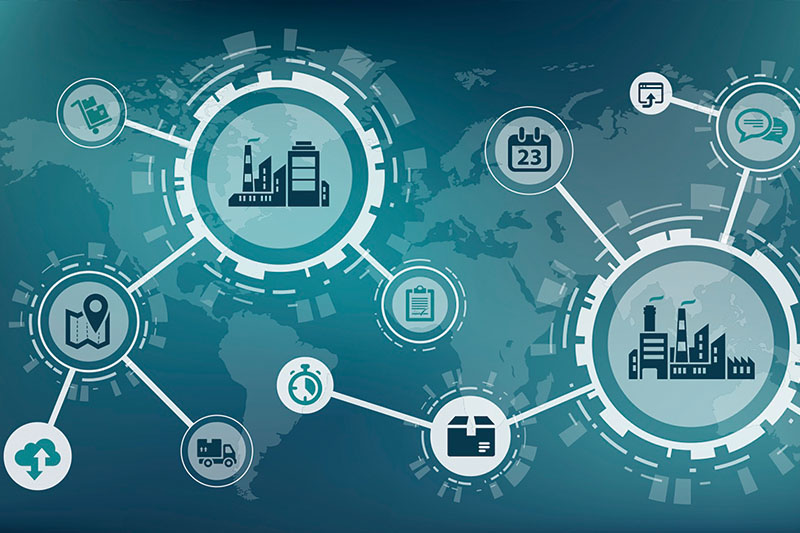
Suddenly, China no longer looked like an ideal production base. AsTaiwanese manufacturers scrambled to avoid the tariffs, the Tsai Ing-wenadministration unveiled a three-year (2019-2021) reshoring incentive program:the “Action Plan for Welcoming Overseas Taiwanese Businesses to Return toInvest in Taiwan.” Led by the InvesTaiwan office of the Ministry of EconomicAffairs (MOEA), the program provides assistance and preferential conditions toreturning Taiwanese manufacturers. By bringing these firms home, the governmentaims to revitalize local industry.
The program covers land, power and water supplies, financing, laborand taxation. “Think of it as a one-stop shop to help manufacturers return homesmoothly,” says Emile Chang, director-general of the Ministry’s Department ofInvestment Services and chief executive officer of InvesTaiwan.
A similar organization, the Invest Taipei Office established in 2016by the Taipei City government’s Department of Economic Development, isspecifically focused on attracting investment opportunities to the capitalcity. It stresses Taipei’s comprehensive infrastructure, safe and comfortableliving environment, numerous universities, and such facilities as the NeihuTechnology Park and Nangang Software Park.
For many Taiwanese firms, repatriating is feasible because laborcosts in Taiwan are no longer significantly higher than in China’s developedcoastal regions. At the same time, Taiwan offers strong supply chainfundamentals, a familiar environment, and rule of law.
Further, the government’s plan addresses Taiwan’s longstanding “fiveshortages” (referring to limitations in the supply of land, water, electricity,labor, and professional/managerial talent) – with special emphasis on land.According to government data, 435 hectares of industrial land are immediatelyavailable and supply will be increased to about 873 hectares before 2021.
As for water and electricity, the government maintains that it canensure an adequate supply of both. With the most pressing of the five shortagesunder control, relocating from tariff-hit China looks like an increasinglyattractive option. Tax breaks and swift access to financing are additionalincentives.

As a result, business opportunities are growing here even as thetrade war casts a shadow over the global economy. Through June, the MOEA hadapproved 84 applications from companies reshoring under the initiative. Theirinvestments are valued at almost NT$435 billion (US$14 billion) and areexpected to create more than 39,000 jobs, the Ministry says.
ICT firms make up the largest share of returnees, particularlymakers of high-end network communication equipment, servers, and peripheral PCproducts. Manufacturers of machine tools, auto parts, and bicycles are alsowell represented.
“Returning onshore is an important option” for Taiwanese telecommanufacturers, says Remus Hsu, a senior network communications industry analystat the semi-governmental Market Intelligence & Consulting Institute (MIC).These firms will need to rejuvenate local production lines that have been usedmainly for prototyping, he notes. But once they do so, “they can support someproduction for export to the U.S, alleviating the overall impact of thetariffs.”
Taiwan’s exports to the U.S. rose 17.4% in the first half of theyear to a record US$222 billion on the back of strong demand for electronicsused in PCs, the Ministry of Finance reported in July. The American market nowaccounts for 13.9% of Taiwan’s electronics exports, a 13-year high, theMinistry said.
In contrast, China’sexports to the U.S. fell by about 15% annually in the January-March period,PriceWaterhouseCoopers (PwC) noted in its July Global Economy Watch report. IfU.S. import substitution continues, “it is likely to contribute to fastereconomic growth in Vietnam, South Korea, and Taiwan, in particular,” PwC said.
Darson Chiu, an economist at the Taiwan Institute of EconomicResearch (TIER), estimates that the investment Taiwan is repatriating fromChina could help boost GDP growth by at least one percentage point this year,“with all other things being equal.”
The Tsai administration’s investment repatriation scheme is provingmore effective than previous efforts because it targets raising economicproductivity, he says. “Only companies who are involved with the 5+2 plan canbenefit from the incentives,” he notes, referring to a state-led policy toupgrade Taiwan’s industrial base, focusing on seven sectors the governmentdeems innovative. Those sectors are advanced technology, biomedicine, smartmachinery, green energy, national defense, circular economy, and high-valueagriculture.
Without strict guidelines on the returning investment, capitalinflows chasing high returns could pour into the real-estate sector,overheating the market, Chiu observes. That’s exactly what happened when formerPresident Ma Ying-jeou invited Taiwanese businesspeople to repatriate theiroffshore investments by lowering the gift and estate tax from 50% to 10% in2008. Since most of the money went into the property market, the benefit forTaiwan’s real economy was negligible, Chiu says.
With that in mind, lawmakers passed a bill in July allowingTaiwanese entrepreneurs who bring home offshore assets to invest underpreferential tax rates – but the money cannot be used to purchase property orsecuritized property products. The bill requires that at least 70% ofrepatriated funds be placed in productive investments, while 25% can be usedfor financial investments and 5% for other purposes.
According to the Finance Ministry, the law is expected to attract atotal of NT$800 billion to NT$900 billion (US$25.7 billion-$28.9 billion) ininvestment.
Supply chain reorientation
In the short-term, the Tsai administration expects continued capitalinflows attracted by the government’s three-year action plan, saysInvesTaiwan’s Chang. Tech hardware makers, many with moderate or heavy exposureto the American tariffs on Chinese goods, will be among the main beneficiariesof the policy.
In June, MOEA announced that a number of hardware makers wouldincrease their investments here under the government’s plan. They includeUniversal Microelectronics Co., a maker of consumer electronics components,which will invest more than NT$900 million to expand its factory in theTaichung Nantun Industrial Park; circuit protection components manufacturerThinking Electronics Industrial Co., which will spend NT$1.58 billion to builda new automotive electronics and 5G plant in Kaohsiung’s Nantze ExportProcessing Zone; and mobile-phone camera-lens maker Zhong Yang Technology Co.,which will spend NT$770 million to beef up local production capacity anddevelop new optical lens products.
The Ministry said several other key investments were being made bytech firms that declined to be named publicly. One of these, described asfollowing a top client back to Taiwan, was said to be planning to spend NT$3billion to upgrade its plant in the Southern Taiwan Science Park.
Another firm plans to build a new plant in the Hsinchu Science Park,adding advanced production capacity utilizing automated equipment for makingits network communications products, the Ministry said.
Analysts say that makers of telecom equipment, given their heavyexposure to the trade war, are accelerating their departure from China. Afterthe U.S. announced the first round of tariffs in mid-2018, most Taiwanesetelecom manufacturers began to relocate portions of their production fromChina, while also holding out hope that Beijing and Washington would reach adetente, MIC’s Hsu says. Initially the Taiwanese firms avoided spending heavilyto shift their manufacturing facilities, but have had to reconsider as thetrade war dragged on.
When the tariffs were at the 10% level, U.S. buyers were largelywilling to absorb the cost increase, but they also advised their Taiwanesepartners to prepare to decamp from China, Hsu says. Pressure to make the movemounted after the tariffs climbed to 25%.
Given the rising tension in the Sino-U.S. relationship, “themigration of Taiwanese telecom manufacturers away from China looks set tobecome a long-term trend,” Hsu adds.
Research by MIC shows that if the U.S. government proceeds withplans, currently under study, to implement tariffs on an additional US$300billion worth of Chinese goods, the most seriously affected sector would bemobile phones and related products, which make up 70% of the list. That wouldspell bad news for Taiwanese manufacturers, who would be heavily exposed to thelevies through their role in Apple’s supply chain.
Should those further tariffs by implemented, Apple might pass onsome of the additional costs to its Taiwanese partners, MIC says. At the sametime, the tariffs would cause the volume of shipments to fall. Those factors’one-two punch could put a sizable dent in the bottom lines of Taiwanese iPhonesuppliers.
Indeed, in many cases, China’s loss is not necessarily Taiwan’sgain. While some Taiwanese firms have returned home, others are moving capacityto emerging regional tech supply chains in Europe, North America, and SoutheastAsia.
Supply-chain fragmentation is occurring because no single countrycan take China’s place. “There’s what we can call an ‘ABC’ (Anywhere But China)supply chain now, but there is not going to be another ‘world’s factory,’ saysJack C. Chang, deputy general director of the Industry, Science and TechnologyInternational Strategy Center (ISTI) at the Industrial Technology ResearchInstitute ITRI).
To meet that challenge, Taiwanese manufacturers have adopted four principalstrategies including reshoring, Chang notes. Those focused on the China marketitself are redoubling efforts to boost sales to Chinese customers. Others arebeefing up capacity in emerging markets, mainly Southeast Asia and India.Finally, a few are investing directly in the U.S. or building plants in Mexicoto supply American customers.
Larger companies, who often already have extensive overseasoperations, are in a better position to steadily shift capacity away fromChina. Small and medium-sized enterprises, hamstrung by capital constraints,are adopting more of a wait-and see approach, ITRI’s Chang says.
Regionally, one advantage for Taiwan as a manufacturing location isits developed country status. In contrast, countries like Vietnam, Indonesia,and India have inferior infrastructure, fragmented supply chains, in some casesa shortage of skilled labor, and poor internet connectivity relative to Taiwan.Further, given local operational risks (such as strikes), shifting productioncapacity to such countries “requires careful consideration,” says MIC’s Hsu.
Looking ahead, economists say that robust returning investment willbe sufficient to offset export declines wrought by the trade war – at least forthe remainder of 2019. DBS Bank forecasts that while Taiwan’s economy willexpand by a modest 1.9% this year, domestic investment growth should hit asix-year high of 4.9%, fueled by the capital inflows from returningbusinesses.


