
Mr. President: Facing China, play the long game. Tough in private, cordial in public.
Last Friday the world awoke to new warnings between America and China. Share prices swooned. In the midst of a transcendent health crisis, the world’s superpowers continue a decades-long transition in the world order.
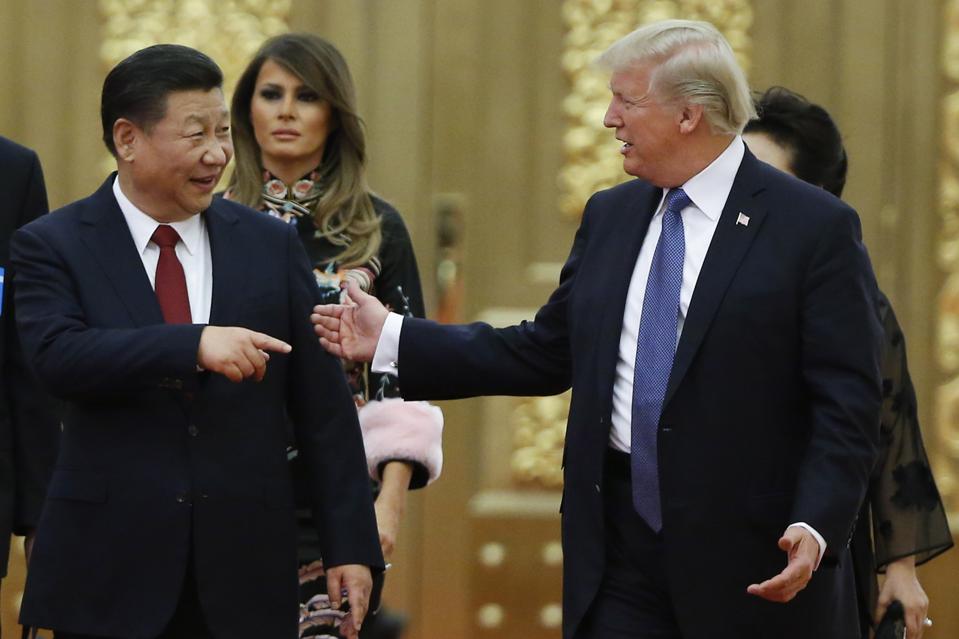
U.S. President Donald Trump and China’s President Xi Jinping arrive at a state dinner at the Great … [+] Hall of the People on November 9, 2017, in Beijing, China, during the US President’s 10-day trip to Asia. (Photo by Thomas Peter – Pool/Getty Images)
2017 Getty Images
Meanwhile, reflecting on the Covid-19 crisis, former Bank of England governor Mark Carney asserted in The Economistlast month, “Even after, local resilience will be prized over global efficiency.”

Mark Carney, former governor of the Bank of England speaks during a news conference at Bank Of … [+] England on March 11, 2020 in London. The Bank of England has cut interest rates from 0.75% to 0.25% amid the Coronavirus outbreak. (Photo by Peter Summers – WPA Pool/Getty Images)
Getty Images
We today face two colliding threats— viral and geopolitical— with at least one common, partial answer: local resilience. Contrasting preparedness and effectiveness facing the pandemic underscores the challenge: from Korea’s rapid, effective management to America’s slow recognition and disjointed efforts.
It would be easy to read past Carney’s remark, “resilience prized over efficiency,” as a temporary virus-related concern. That would be a mistake. In addition to our vulnerability to health threats like Covid-19, our world faces an accelerating breakdown of Pax Americana, in which the United States had policed the world. Business leaders take note.
Optimized During Stability— Poised For Disruption
Since the onset of the Industrial Revolution, scale provided the most efficient means to produce most physical goods. The larger your plant, the lower your costs, for the most part. The US-European designed global system, enforced first by British and later American power, enabled companies to seek the most efficient supply chain configurations which today often span the globe.
Relative geopolitical stability encouraged global supply chains optimized for scale manufacturing at a distance.
Geopolitical conflicts, war and pestilence expose vulnerabilities, as Covid-19 does today. While supply chains have performed remarkably well, exceptions signal future threats. Witness livestock disruptions in China and the US and shortages of products as simple and essential as PPE for healthcare professionals.
Right Conflict, Wrong Timing
Confronting China’s trade and intellectual property practices has been the right thing to do. It is a battle long time in the making. Inaction threatens economic prosperity and security in America, Europe and the World. The Trump Administration has been right to prioritize tough action.
However, now is a particularly bad time to threaten a trade war. Under similar conditions— stock market crash, rising international tensions— President Herbert Hoover and legislative colleagues Reed Smoot and Willis Hawley, passed a massive tariffs program that amplified the Great Depression.
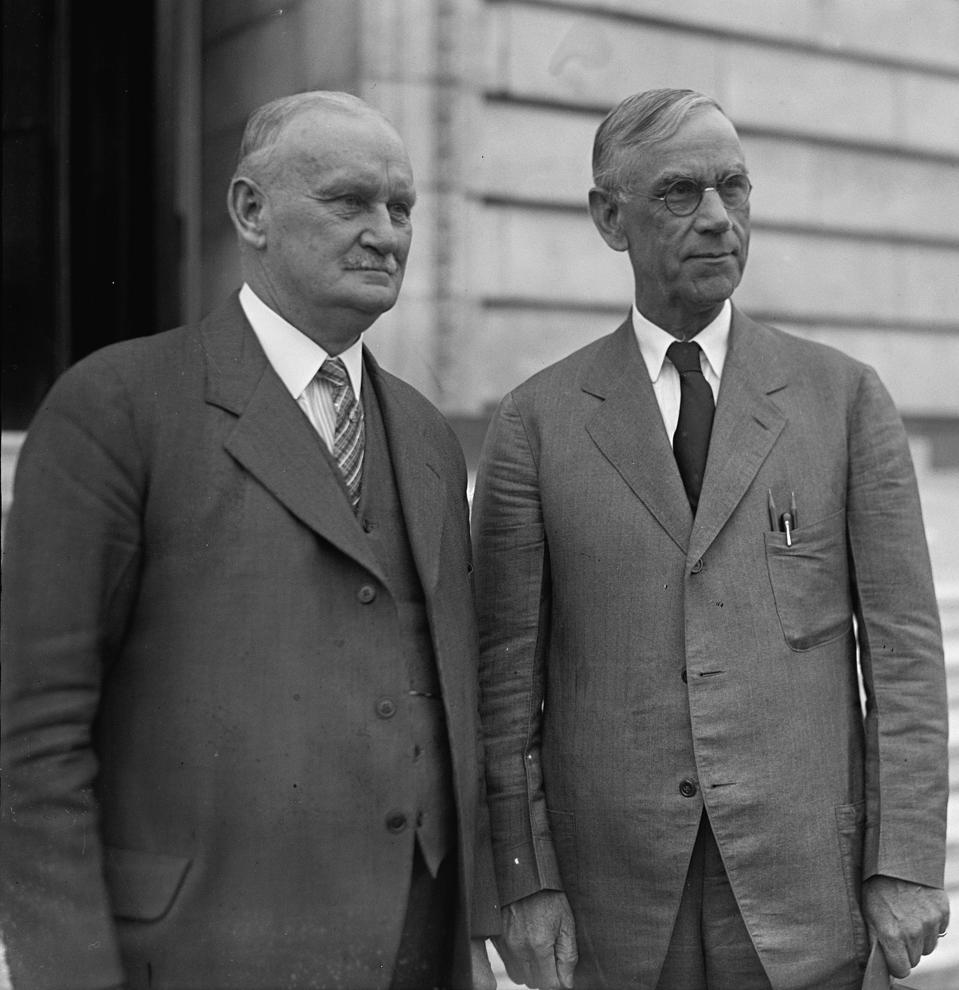
Reed Smoot and Willis Hawley, two Depression Era legislators whose names grace perhaps the most … [+] infamous tariff legislation in US history.
Wikimedia Commons
America should avoid public trade confrontations throughout the Covid crisis while assertively engaging China behind the scenes. If necessary, remove the gloves after the crisis abates.
What We Can And Should Do Now
While I disagree with the Trump Administration’s public antagonism of China, recent efforts to attract strategic manufacturing capabilities back to our shores is the right policy at the right time. The crisis offers an ideal rationale: ensuring access to critical capabilities. America can advance this mission without vilifying China or alienating other trading partners.
All Americans should welcome White House discussions with Intel and Taiwan Semiconductor and others to locate new fabrication plants in the US. Taiwan Semiconductor recognizes the intelligence of locating manufacturing closer to ultimate demand— and further from its increasingly aggressive neighbor. Intel CEO Bob Swan cites “the uncertainty created by the current geopolitical situation.”

Intel CEO Bob Swan during an Intel press event for CES 2020 on January 6, 2020 in Las Vegas, Nevada. … [+] (Photo by David Becker/Getty Images)
Getty Images
The transition won’t be simple. While the US remains a leading player, suppliers and customers requiring semis are well-developed in East Asia. Years of foreign supplier network development means years of rebuilding here in the US.
Beyond national security, reshoring amplifies trends that began well beforeCovid-19.
Digital Technologies As Keys To Resilience
The Internet’s progenitor, ARPAnet, originated from the US Defense Department’s objective to create a communications infrastructure resilient through nuclear attack. The resulting distributed, scalable design pushed decision making to the edges while enabling the eventual emergence of cloud computing.
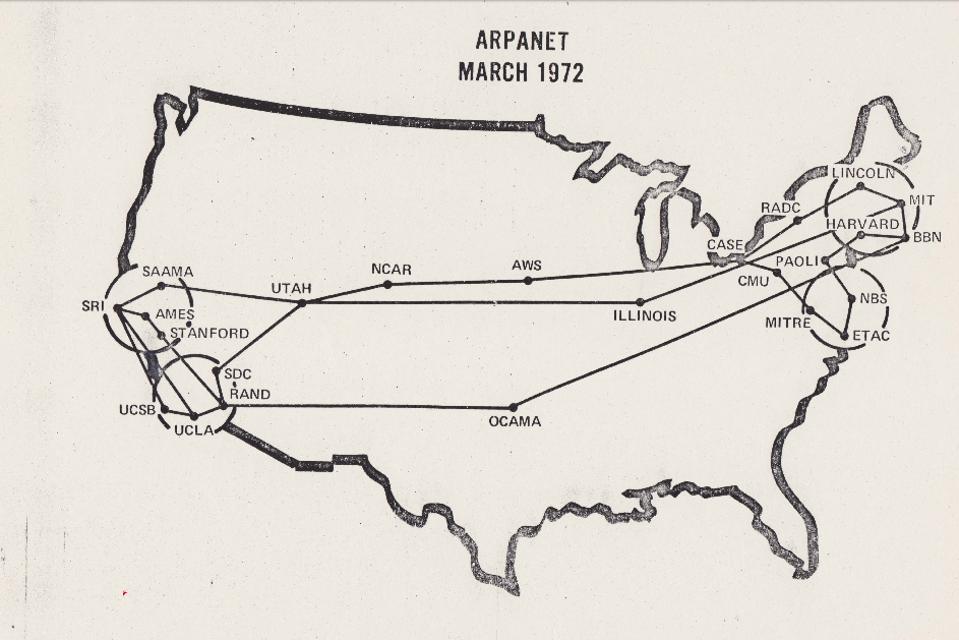
The extent of ARPANET’S communications network, March 1972. ARPANET evolved into today’s … [+] world-spanning Internet.
Wikimedia Commons
The Internet provides a model for the evolution of digitally-enabled supply chains for physical goods.
What if we could locally produce as many face masks or ventilators as required on demand? People have done so across the country, albeit in a disjointed fashion, rapidly applying 3D printers to local production.
Imagine how supply chains will shift as corporations and entrepreneurs discover how to coordinate distributed production and delivery capabilities for an ever-wider range of products and services. Digital technologies— from AI, data analytics and automation to distributed energy generation and additive manufacturing (3D printing)— enable such dramatic re-design of supply networks.
Consider a few winners of the past few months. Distributed scale and the ability to toggle between physical and online environments have been hallmarks of success. Amazon is the exemplar, but Walmart and Target have also thrived. Dominos has become more a tech company than a pizza purveyor. Etsy enables thousands of small-scale producers to reach a mass market. Tesla updates vehicle software remotely— for its cars built by a largely US-based supply chain for US consumption.
Each company devoted significant capital and attention over many years to create more responsive capabilities— producing and providing value ever closer to the moment of demand, a dynamic known as proximity.
The most compelling health-related example I’ve seen was shared by retired US Army colonel Dr. Geoffrey Ling, a practicing physician at Johns Hopkins currently serving on our medical front lines. At TWIN Global 2018, Dr. Ling shared a Department of Defense-funded solution for pharmaceutical shortages.

Retired Army Colonel Geoffrey Ling, M.D., speaks for TWIN Global 2018 in Chicago.
TWIN GLOBAL/Oemig
Drug shortages don’t just plague war zones. They’re a constant challenge in hospitals across the United States. Most of our generic drugs are produced in— you guessed it— China.
Dr. Ling shared what is essentially a “3D printer for drugs. It’s a set of pumps and values, like the soda machine at your local Fudruckers.” Production on demand where and when needs arise. (Find more about Dr. Ling’s work in this Forbes article.)
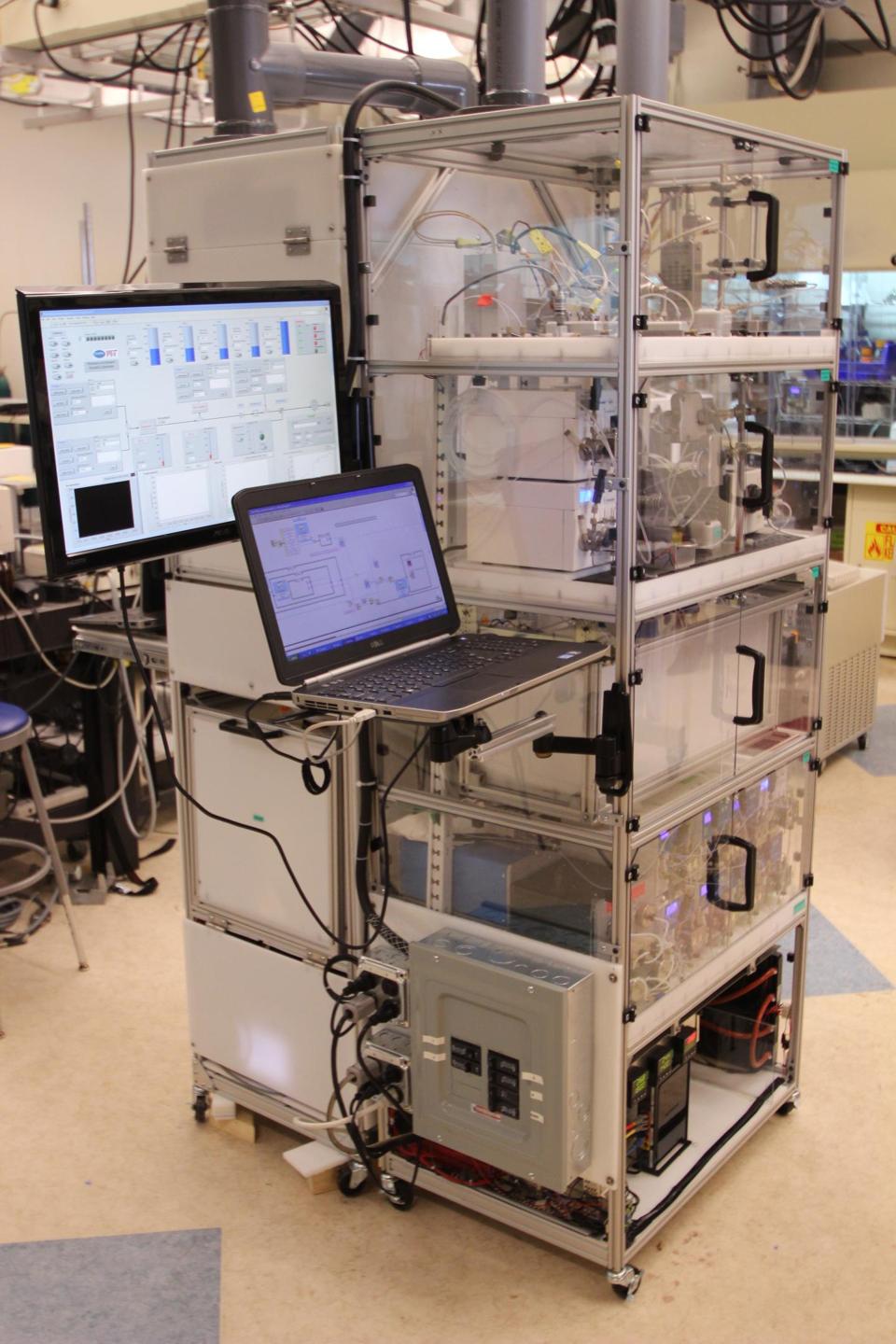
The on-demand pharmaceutical production system resulting from a DARPA-funded initiative, in a photo … [+] from the April 1, 2016, issue of Science, published by AAAS. The paper, by A. Adamo at Massachusetts Institute of Technology in Cambridge, MA, and colleagues was titled, ‘On-demand continuous-flow production of pharmaceuticals in a compact, reconfigurable system.’
MIT
The resulting invention can today produce dozens of different pharmaceuticals on demand in units the size of a small refrigerator. Imagine networks of these machines across the United States, and eventually the world. No more outstocks, no more expired medicines, more flexible response to immediate demands, typical or catastrophic.
Accelerate Proximity— Leapfrog The World
We’re heading toward far more hybridized supply networks. Some production will remain in massive facilities for years to come. Mid-sized and small instantiations for various products—such as on your kitchen counter at home— will enhance agility. Digital capabilities transform what’s possible and most competitive.
Governments, businesses and taxpayers should assign significant value to the resilience such models enable. This is America’s opportunity to leapfrog the world in the distributed, demand-driven supply of physical goods.
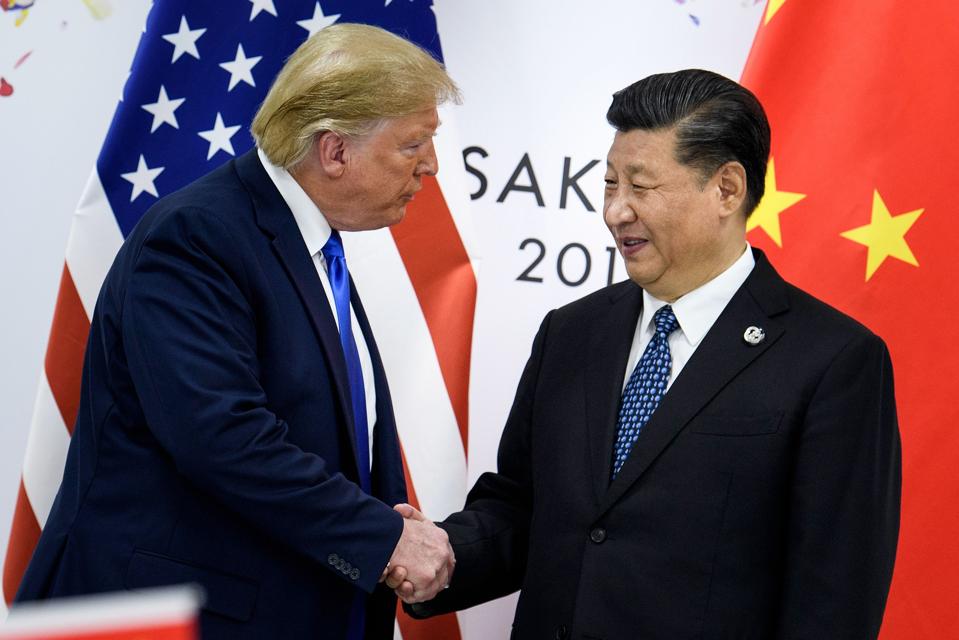
China’s President Xi Jinping (R) shakes hands with US President Donald Trump before a bilateral … [+] meeting on the sidelines of the G20 Summit in Osaka. (Photo by BRENDAN SMIALOWSKI/AFP via Getty Images)
AFP via Getty Images
Back to geopolitics, China and the US need each other for ongoing prosperity. Rather than seeing the decades-long decoupling of supply chains as a threat, both countries should approach this as an opportunity. China intends to be a leader in all of the technologies needed to power the coming proximity economy. America must likewise redouble our commitment.
Focus on local resilience. Postpone public confrontation with China until after this crisis has abated. America will thus be better positioned to navigate China’s rise— peacefully if possible, backed by strength. We’d be stronger and more resilient, prepared to play America’s best long game.


