
The data on comparative labor and energy costs may seem compelling. But the process of bringing assembly work back to domestic factories from abroad is substantially more challenging than the economics alone would predict.
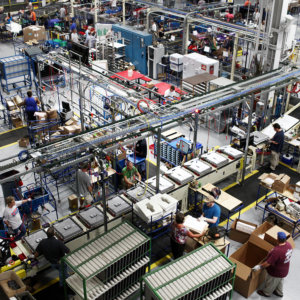
Managers at GE’s Appliance Park operations in Louisville, Kentucky, had a goal of hiring 2,500 new workers.
Image Courtesy of General Electric Company.
Rising labor costs in China and other emerging economies, high supply chain and logistics costs, and wide differentials in the costs for electricity and natural gas in different parts of the world are provoking a fresh round of relocation of manufacturing and production. While some labor-intensive jobs are moving out of China to Southeast Asia or the next emerging low-cost regions, some high-profile manufacturing work is returning to the United States, to the cheers of some who are proclaiming the beginnings of a manufacturing renaissance. Wal-Mart holds supplier conferences to promote “Made in U.S.A.,” and the retail giant encourages manufacturers to commit to producing in the United States by promising to purchase $50 billion more in U.S. manufactured goods in the next 10 years. It is targeting the reshoring of products made for its stores by trying to facilitate and accelerate reshoring efforts among its suppliers. Consultants proclaim the reemergence of the United States as a competitive place for manufacturing — and are pushing their services with reshoring conferences, reports and lots of advice.1
While the macroeconomic data on comparative labor and factor costs may be compelling, the actual process of reshoring — bringing assembly work back from abroad — is hard work. This is especially true when the resources upon which a company draws (the supplier base, the workforce, and even the company’s own internal product design capabilities) have atrophied. In an earlier paper, my Harvard colleague Gary Pisano and I documented the loss of the “industrial commons” in the United States, the shared resource base upon which manufacturers draw.2 My recent research has looked at several initiatives aimed at rebuilding regional capacity, including General Electric Co.’s Appliance Park operations in Louisville, Kentucky; Google’s efforts in partnership with Flextronics International Ltd. to assemble the MotoX smartphone in Fort Worth, Texas; a high-end technology product manufactured at Flextronics facilities in Austin, Texas; as well as comparison factories in Europe and Asia. (See “About the Research.”) What can we learn from these efforts to help managers prepare for reshoring?
The benefits were no surprise. Positioning manufacturing close to the market minimizes the inventory of goods in the pipeline and reduces delivery times.


