Welcome to Thomas Insights — every day, we publish the latest news and analysis to keep our readers up to date on what’s happening in industry. Sign up here to get the day’s top stories delivered straight to your inbox.
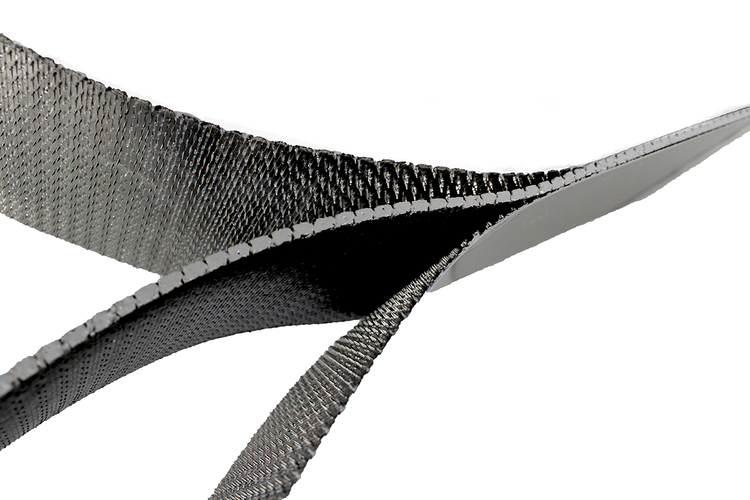
“Nothing likes to stick to steel,” says Mark Lavelle, Global OE Sales Director for metal-forming company GRIPMetal. “In order to get something to stick to steel, you have to ensure that the steel is completely clean: You have to shot blast the surface, apply adhesives, and then bond something to it. But it’s a very difficult process, unstable, and it doesn’t last. When you can integrate a mechanical bond, that solves all those problems.”
Enter GRIPMetal.
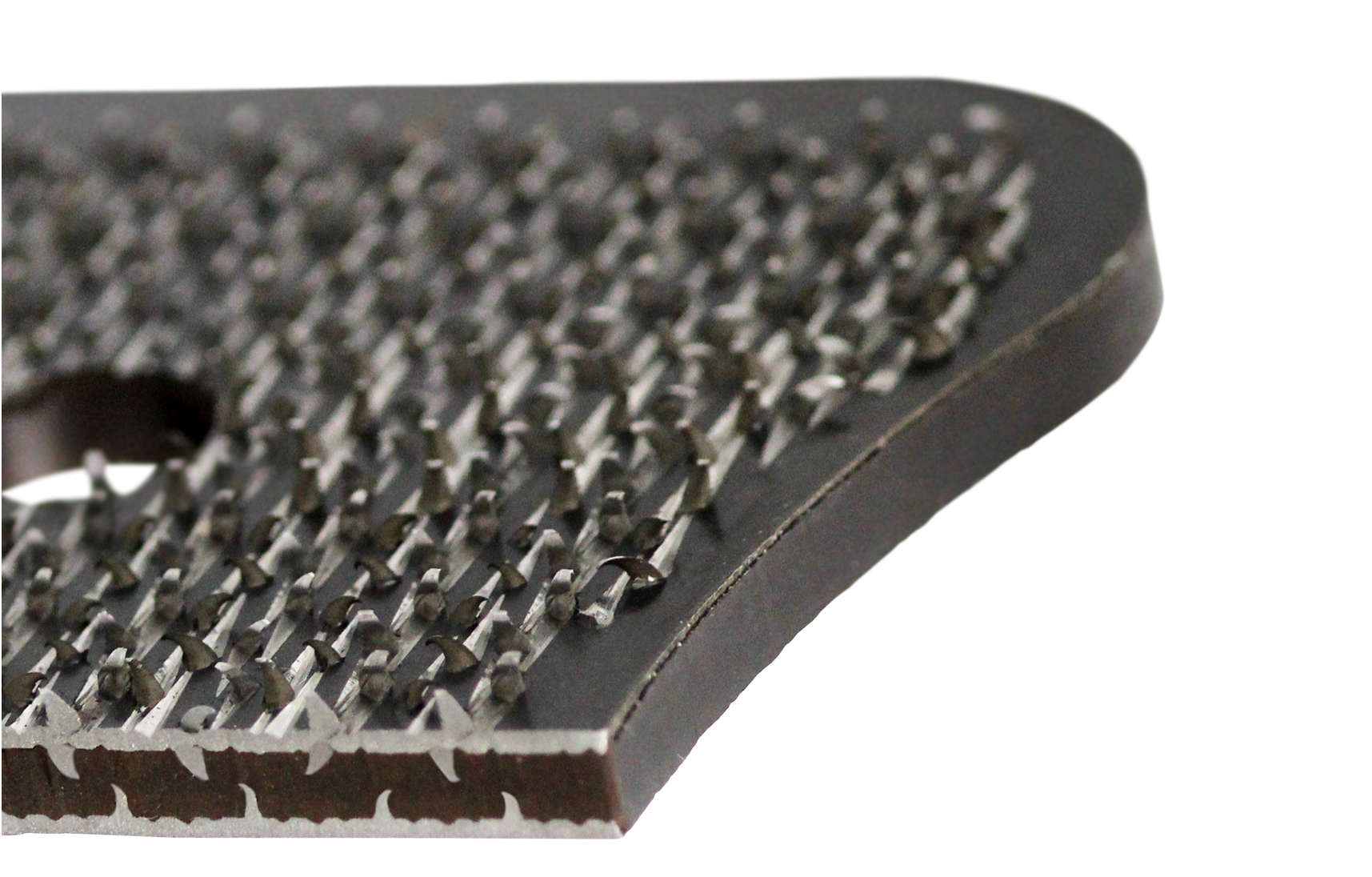
The Toronto-based manufacturing innovator developed the world’s leading mechanical attachment technology. Their patented GRIP technology uses specially designed hardened metal hooks on the surface of thin gauge metallic sheets to create pressure bonding. To date, they’ve sold more than a billion units across the world — with a zero failure rate.
“It’s a technology that no one else has,” says Lavelle. “It’s a next-generation material that allows you to mechanically bond, instead of the standard practice today of using environmentally harmful adhesives.”
Applied to wood, concrete, and polymer composites, GRIP is impacting the future development of everything from electric vehicles (EVs), to bridges, and simple housing.
Quick Facts to Know About GRIPMetal
- While optimizing weight, GRIPMetal enables simple sheet metal to be molded or pressure bonded to weaker materials — with fewer steps in the bonding process and reduced materials cost.
- GRIPMetal can be employed to bond metal to wood, concrete, and plastic, and has virtually unlimited other applications.
- By reducing material requirements, eliminating adhesives, and allowing for the use of recycled material, non-hazardous GRIP technology allows users to “go green.”
- GRIP technology, which is manufactured in North America, is available as rolls or sheets of steel, aluminum, copper, brass, and titanium.
Thomas Insights (TI): Tell us about your company and what sets you apart from the competition.
Mark Lavelle (ML): GRIPMetal technology has been in the market now for over 25 years. It first revolutionized the automotive industry in the sense that it allowed manufacturers to eliminate adhesives and create a mechanical bond between the friction material and the backing plate of brake pads which, obviously, operate in the harshest environments — under very extreme heat and cold.
About five years ago, we took the technology and applied it onto sheet metal, which has really opened up opportunities in different markets. It can be single, or double-sided, and we can even apply it onto thin metal.
TI: What’s the biggest question you get from prospects or customers? And how do you respond to them?
ML: The biggest question we get is “How do I use it?” because GRIPMetal is such an innovative technology. It’s changing the established way of manufacturing and looking at things completely differently. Because GRIPMetal provides greater strength with less material it enables manufacturers to eliminate many manufacturing processes and even to develop extremely lightweight products.
As an example, in the automotive sector, GRIP is critical in the hybrid era and with electric vehicles (EVs) for making vehicles as light as possible.
In the construction sector, a number of companies are looking to build taller buildings using wood. That’s definitely a trend in Europe, and recently it’s come to North America as well. We can offer the ability to bond using GRIP and incorporate the strength and other beneficial properties of metal into the wood.
It also works great with concrete: It’s like adding rebar. You can create very thin concrete structures very easily without the need for forms because you can use the sheet metal as the actual form.
TI: How do you measure success at GRIPMetal?
ML: We really want to see people take this technology and utilize it. The applications are endless! We want to get it into people’s hands and see what they can develop using it.
Right now it’s being used as a heat shield in automotive applications for the Corvette. We can even make a composite brake pad using GRIPMetal that takes half the weight out of a conventional brake pad.
We’ve also had a number of universities use the material to make different structures that show the capability of how you can form it in a variety of unique ways.
TI: What’s something about your business that isn’t widely known that you’d like to highlight?
ML: Our company is very well-known in brakes, but not many people understand all of our material’s applications and what various industries can accomplish with it.
In particular, we’re now making and selling thousands of building blocks using GRIP. With schools and restaurants reopening amid COVID-19 concerns, we’re building all kinds of temporary and semi-permanent walls in schools in the Toronto area right now using GRIP technology to provide them with a fast, agile way to adhere to social-distancing requirements.
TI: What do you think is the biggest challenge facing industry today, and how is GRIPMetal working to overcome it?
ML: We’re seeing a really substantial shift in manufacturing from offshoring to reshoring. If I go back to what’s happened in our parent company’s industry — brakes — we’ve seen that whole manufacturing sector move offshore. Manufacturing in North America really has been slowing; a lot of companies buy everything offshore now.
So what our team at GRIPMetal is trying to do is show that with our advanced, next-generation technology, there are ways that we can do manufacturing production inexpensively and effectively in North America. We’re trying to use what we have and build the product locally at a reasonable price, keeping manufacturing here in North America.
This article was brought to you by GRIPMetal.

Image Credit: Image courtesy of GRIPMetal
More from Business & Industry